
The Beartooth Foothills Project
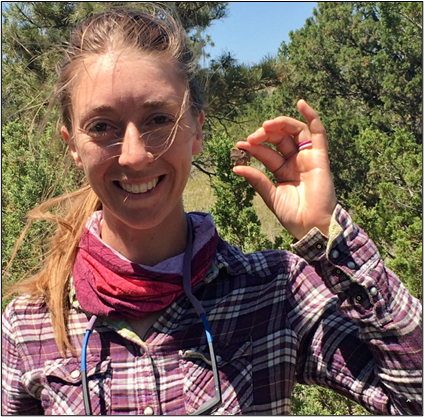
AERI began investigations at the Beartooth Foothills Project in the spring of 2025. For 10 days in May, AERI researchers and public volunteers documented and assessed multiple precontact sites spanning the Holocene on a private ranch in the foothills of the Beartooth Mountains.
The ranch had never been formally researched or had a professional archaeological assessment conducted, but the landowner, an adherent advocational archaeologist and conservationist, had several hypotheses he wanted assessed regarding an array of aligned (potentially celestially-tied) stacked stone features and large boulders on the property.
AERI researchers and volunteers, with the aid of the landowner, conducted minimally invasive excavations, surface reconnaissance, and micro-organic radiocarbon (AMS) and optically stimulated luminescence (OSL) assessments of several stone features within the rock alignments, as well as of two prominent boulder-linked occupation areas, likely tied to the hypothesized rock feature alignments.
AMS samples were collected beneath spatially tied rock features to assess the comparative age of the stone features' construction. OSL samples were collected to gauge the age of the strata in which the stones were nested and to investigate whether any natural processes may have formed, altered, or placed the stone alignments in a semblance of cultural patterning.
During the 10-day field investigation of the Beartooth Foothills Project, AERI researchers discovered two bifacial lithic tools, both fragments of well-made and maintained Middle Paleoindian technologies associated with the Folsom techno-complex, including an impact-fractured Folsom point midsection. The point fragment is made from a regionally well-known lithic raw material quarry from the Bighorn Mountains in Wyoming and Montana, the Phosphoria formation, known to be used by Paleoindian populations regionally. Notably, the point is made from the lesser found green variety of the raw material. Regionally semi-translucent green Phosphoria was found in association with the Clovis techno-complex Colby Mammoth Kill site in the Bighorn Basin in Wyoming.
AERI volunteers also uncovered an obsidian flake and two gray-green, polished, groundstone celts associated with a hearth feature.
The laboratory results were just as exciting as the field results. AERI researchers and volunteers prepared the artifacts, collected samples for laboratory analysis, and shipped them to the appropriate laboratories. Meanwhile, at the AERI office in Livingston, we began our own analysis.
The groundstone celt, both in material (green granite) and style, matches well with artifacts from the Hopewell material culture. A culture associated with monumental mound-building in the midwestern regions, tied to major, ordered rivers that feed the Mississippi River, known to have traded with or visited the GYE for obsidian from Obsidian Cliff and Bear Gulch between ~2150 and 1500 years before present (BP). Additionally, the obsidian flake found in association with the celts and hearth feature was sourced to Obsidian Cliff, WY (NROSL 2025) and had a 3-micron-obsidian hydration rind, which, when considering local fire regimes, would indicate sometime between 4300 and 2000 BP.
The stone features date to the oldest periods of construction within the Hopewell culture, at 1250 BP, while more recent constructions, such as a spoked medicine wheel-like feature, date to later periods of construction within the last 300-260 years, demonstrating likely cultural maintenance and construction of the site's stone alignments and features.
Furthermore, the Folsom point was sampled for protein residues using 11 different antisera (AINW 2025) because it was recovered from a subsurface context, which gave us greater confidence in the results. The CEIP protein residue results from AINW tested positive for sheep, likely the Late Holocene larger-bodied version of the Bighorn Sheep (Ovis canadensis). This is one of the few instances linking Folsom populations regionally to Bighorn Sheep predation.

Figure 1. Folsom point that tested positive for sheep proteins.
OSL samples and other laboratory data are still being interpreted and analyzed, and we look forward to sharing those results in our next update on the Beartooth Foothills Project.
If you're interested in helping us protect, preserve, and uncover the diverse past of these fascinating sites, please consider volunteering for the Beartooth Foothills Project during our 2026 field session in June!
Read the whole 2026 annual report here:
AERI is a 501(c)(3) nonprofit that focuses on research and education regarding the natural and cultural histories of mountainous ecosystems. We synthesize our research findings with traditional wisdom to improve human-environment relationships and conservation practices in these beautiful landscapes.
AERI conducts research in the Greater Yellowstone Ecosystem (GYE), which is culturally significant—either through ceremony or as a direct homeland—to at least 49 affiliated tribal groups. We respectfully acknowledge the peoples on whose traditional territories we reside and work. We work to honor their relationship to these lands, since time immemorial, and to follow their example in caring for this place for generations to come.

Comments