
The Beartooth Ecosystems Alpine Archaeological Research (BEAAR) Project
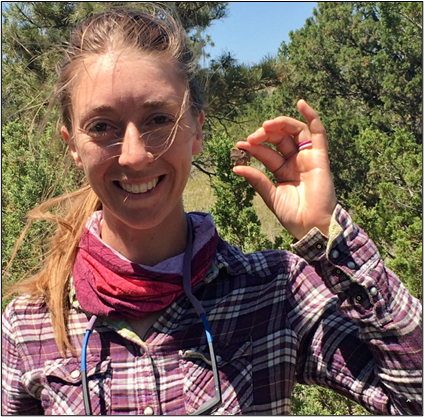
The BEAAR Project’s focus has been documenting the hunter-gatherer use of alpine environments across the Beartooth Mountains of Montana since 2018. Over eight seasons spent in the Beartooth Range of the Custer-Gallatin National Forest, the BEAAR Project has documented the presence of multiple cultures dating back through the Holocene and even to the Pleistocene-Holocene transition. This long-spanning occupation has enabled us to study changes in hunter-gatherer technology, foraging, hunting, diet, seasonal movements across the landscape, and the formation of territories, clarifying the behaviors of the earliest inhabitants of what is now Montana.
In 2025, the BEAAR project continued our efforts from the previous seven seasons and expanded our knowledge of surface material culture scatters and expressions across the Beartooth Plateau. The BEAAR Project crew focused on a new ecosystem in 2026, but one still intricately connected to the broader alpine corridor linking multiple Clovis-associated site clusters at high elevations in the Beartooth Range.
AERI scientists, student researchers, and volunteers documented dozens of new precontact localities in the newly surveyed landscapes, demonstrating a sustained cultural presence spanning more than 13,000 years. Among the artifacts found were a bifacial obsidian knife or projectile point likely from the Late or Middle Paleoindian period, a micro-blade core made from local Crescent Hill Chert quarried from Yellowstone National Park, and a microlith made of chalcedony. Other interesting discoveries that continue to clarify the presence of the Clovis culture at high elevations in the Beartooth Range included a channel flake, a graver, and a concave core-struck blade-like flake tool that had been extensively marginally retouched, all in close spatial association in a single locality. All three of these tools retain elements of manufacture and reduction strategies consistent with the Clovis techno-complex and with other formally diagnosed Clovis culture tools documented in the Beartooth Range since 2021 along this same alpine corridor.

The continued emergence of Pleistocene-aged tools at high elevations in Montana’s mountain ranges is challenging our conceptions of the earliest culture group in Montana and their behaviors in the High Plains, as well as well-established glacial histories and dynamics during the Late Pleistocene in the GYE. Significantly, AERI received the results of our 2024 geoarchaeological and geochronological assessments at the Shady Grove locality, conducted by AERI scientists and visiting geoarchaeological specialist Hillary Jones. Thanks to the assistance of Hillary Jones and Tammy Ritenour of the USU OSL laboratory we have some exciting news!

The Shady Grove locality was the third Clovis locality discovered in the interconnecting corridor, and only the second to produce a complete point or late-stage fluted preform. This specimen was made from petrified wood from the Gallatin Petrified Forest, a local source of raw material. The locality also exhibited extensive large (3-12cm) core struck flakes, many of which exhibit extensive longitudinal curvature, marginal retouch, and multidirectional dorsal flaking patterns consistent with Clovis reduction patterns.
In 2024, 5 OSL samples were collected from a 4m x 1m x 80cm trench conducted just off-site on the same landform as the Shady Grove locality. These samples were collected to assess the age of the oldest sediment packages on the landform, the timing of post-deglaciation sedimentation, and indications of what may have been growing in the sediments (if present) during the Late Pleistocene.
OSL results from the USU OSL lab (2026) revealed that not even the oldest sediment packages dated to 13,000 Cal BP, indicating that these environments were accessible and deglaciated during Clovis times.
Further, the presence of intact sediments 5cm below the positive 13,000 CAL BP dated sample location indicates that some sort of forage was potentially accessible at the time, and could have acted as a nutrient-rich early summer or late summer seasonal foraging behavior used by Pleistocene large-bodied fauna species and taken advantage of by the Clovis culture, similar to other later Holocene populations' use of high elevation ice patches within the Beartooth Range during the Late Paleoindian period three thousand years later.
Interestingly, the CEIP protein residue results recovered from the Shady Grove Clovis point tested positive for either Elk or Deer species (AINW 2025), and as this artifact was recovered eroding out of a subsurface contexts on a landform associated with the 13,000+ Cal BP sediments, we have high hopes for the future of this locality and what it can teach us about ancient mountain use and glacial dynamics during the time of Clovis.
Read the whole 2026 annual report here:
AERI is a 501(c)(3) nonprofit that focuses on research and education regarding the natural and cultural histories of mountainous ecosystems. We synthesize our research findings with traditional wisdom to improve human-environment relationships and conservation practices in these beautiful landscapes.
AERI conducts research in the Greater Yellowstone Ecosystem (GYE), which is culturally significant—either through ceremony or as a direct homeland—to at least 49 affiliated tribal groups. We respectfully acknowledge the peoples on whose traditional territories we reside and work. We work to honor their relationship to these lands, since time immemorial, and to follow their example in caring for this place for generations to come.


Comments