
The Bridger Range Project
Updated: Apr 20
The Bridger Range Project takes place on the Custer-Gallatin National Forest and originated as an extension of Dr. Jack Fisher's (AERI Board) research on the range. The 2025 field season marked AERI’s third season in the Bridgers.
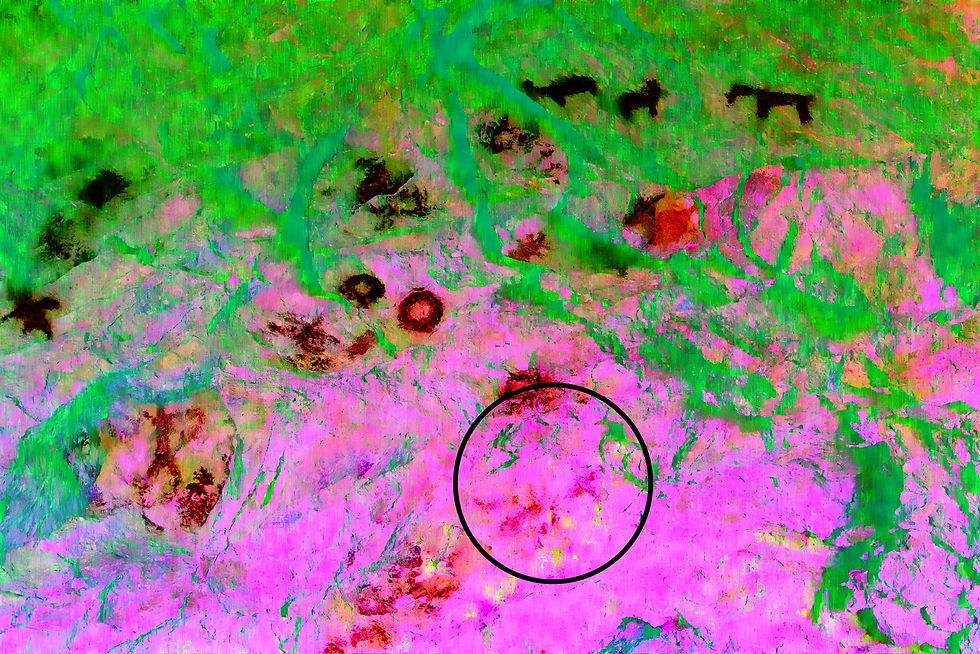
In 2025, AERI researchers, AERI Board members, University of Montana students, and volunteer citizen scientists conducted a brief field event to monitor locations where Clovis-like and other Early Holocene technologies had been documented in previous seasons. Volunteers also updated and reassessed a local rock art site that had never been formally investigated, using modern D-Stretch technologies, which allows us to see older or faded ochre staining on rock art panels.


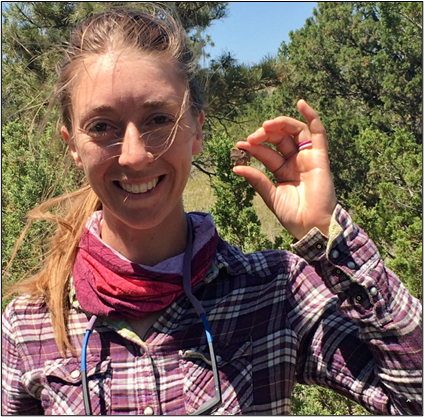
AERI monitored previously investigated locations and documented additional artifacts from varying chronologies, deflating out of disturbed contexts. Of note were three newly recorded localities exhibiting diagnostic projectile points and lithic technologies associated with the Late Archaic and Late Precontact periods. A few highly suspicious fragments of bifacial tools were located retaining reduction strategies similar to those observed in Clovis and Folsom-like technologies, but the recovered artifacts were too fragmentary to assign to a specific chronological period.
Raw materials present on the surface of the sites recorded in 2025 included Malad obsidian from Idaho, Obsidian Cliff obsidian from Wyoming, and multiple forms of dendritic cherts and agates, likely from the formations around Montana City. Certain tools resemble the raw materials known to occur in the Hartville Uplift in southeastern Wyoming, as well as quartzites from the Spanish Diggings quarry.
The rock art site was once a prominent part of regional public knowledge, often visited in the 1900s-1930s when the land was under different ownership. Since the 1930's, the site has fallen out of public knowledge and is now known only to regional archaeologists and enterprising enthusiasts. Our goal was to reexamine the site and apply UV lighting and D-Stretch to high-quality photos taken during the investigation.
The rock art site includes multiple panels depicting humanoid figures, various animal species, geoglyphs, and hunting scenes, as well as a few abstractions that were more difficult to discern. Of interest are the appearances of both horses and deer, and what could be a canid species.
A recurring theme among the panels was the appearance of bear figures. But rather than in a common broadside or side perspective, as prey or pursued species might be depicted, the bear depictions were all forward-facing, with arms and legs spread wide, and often depicted alongside other slightly altered human-like figures.
UV lights loaned by Dr. Scott Carpenter of InteResources were used to assess any older or faded pigment within the panels under investigation. High-quality photos by AERI and AERI Board member Dr. Jack Fisher were used to assess the panels in D-Stretch software during post-field analysis, with assistance from Dr. Carpenter.
D-Stretch-enhanced images revealed multiple faded stains that may have been associated with an elaborate hunting scene or with earlier depictions on the panel before the hunting images were inscribed. D-Stretch imagery revealed what appears to be a human figure holding a drawn bow, facing a prominent cluster of animals that likely includes horse and canid species, as well as potentially elk or deer, along with other faint images.

AERI will briefly return to the Bridger Range in the summer of 2026 for a three-day geoarchaeological assessment of a potentially Pleistocene-aged landform that may retain sediment from that era.
This project can host only three volunteers due to its brief duration and labor-intensive focus; if interested, please reach out to scott@alpineresearch.org.
Read the whole 2026 annual report here:
AERI is a 501(c)(3) nonprofit that focuses on research and education regarding the natural and cultural histories of mountainous ecosystems. We synthesize our research findings with traditional wisdom to improve human-environment relationships and conservation practices in these beautiful landscapes.
AERI conducts research in the Greater Yellowstone Ecosystem (GYE), which is culturally significant—either through ceremony or as a direct homeland—to at least 49 affiliated tribal groups. We respectfully acknowledge the peoples on whose traditional territories we reside and work. We work to honor their relationship to these lands, since time immemorial, and to follow their example in caring for this place for generations to come.


Comments